











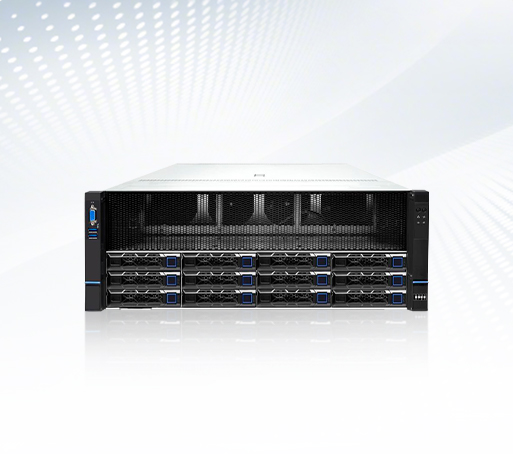
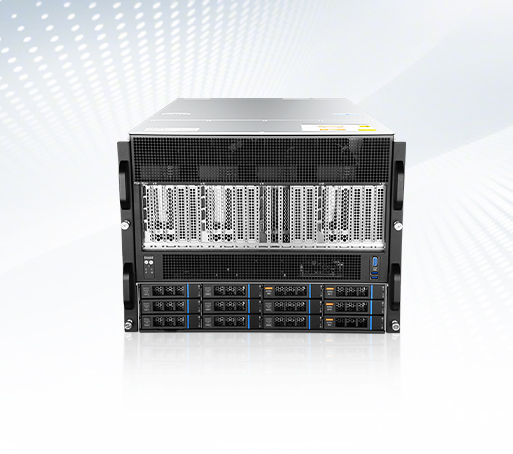
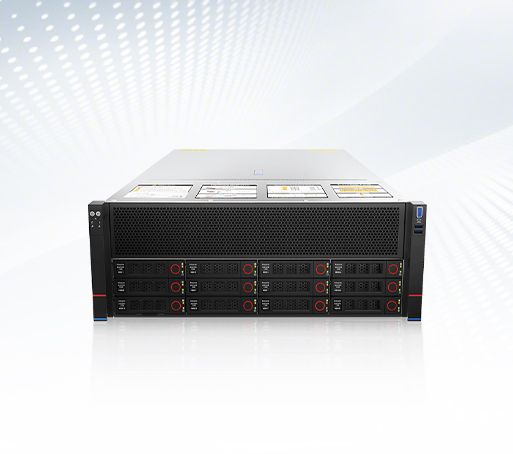
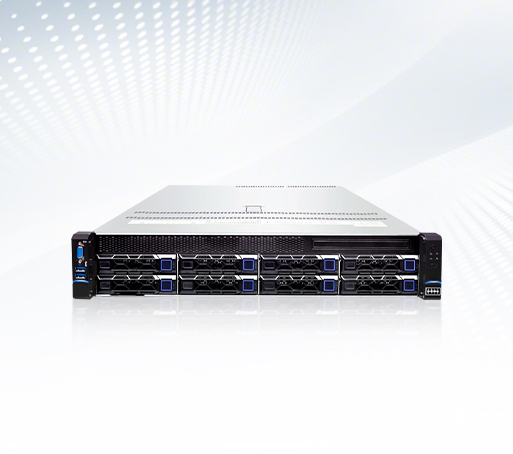
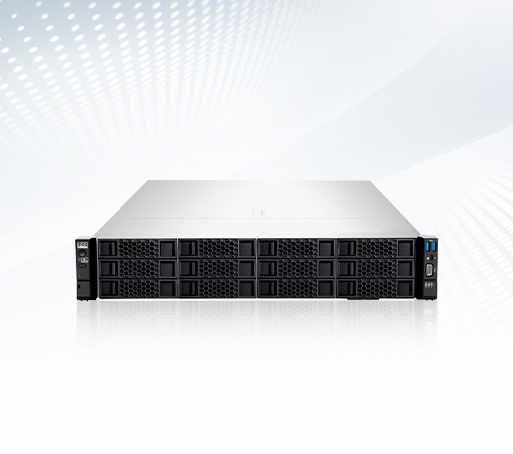
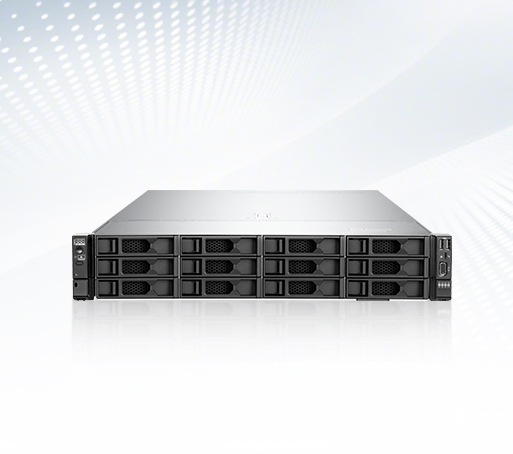


HPC
Solution
High-performance computing (HPC) is a computer cluster system. It utilizes diverse interconnection technologies to closely link multiple independent computer systems, forming a cohesive whole that works in concert. Within this system, the computing power of each connected system is pooled and integrated, creating a powerful comprehensive computing capability that enables efficient tackling of various large-scale computational challenges.


Pain points in scenarios
Low utilization rate of computing resources
The demand for computing resources varies greatly across different scientific research projects or business scenarios. Fixed resource allocation leads to resource idleness during some periods, while during peak periods, the demand cannot be met.

The system has poor scalability
With the development of business, the scale of computing tasks and data volume are constantly increasing, making it difficult for traditional architectures to flexibly scale to accommodate new demands.
Data management is complex
HPC generates massive amounts of data, posing significant challenges to storage, transmission, and backup, making it difficult to ensure data consistency and security.
The energy consumption problem is prominent
Large-scale HPC clusters consume a significant amount of electricity, increasing operational costs and not aligning with the trend of green computing.
Technical Solution
The HPC cluster architecture should adhere to the design principle of integrating "computation, communication, and storage" into a trinity. By deeply coupling hardware selection with architectural design, it aims to maximize the efficiency of high-performance computing tasks.
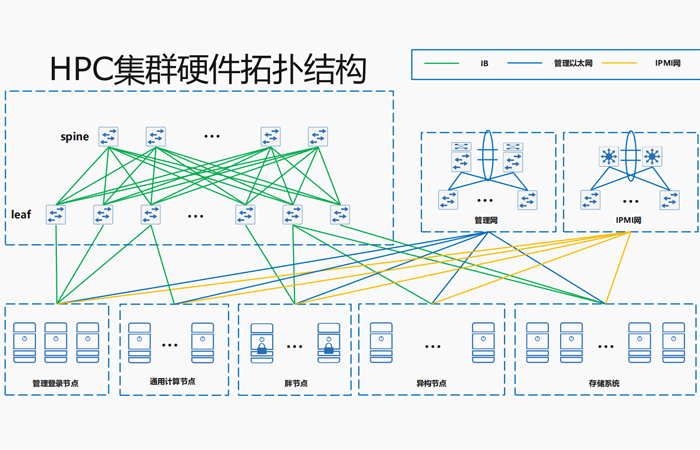
The HPC solution maximizes high-performance computing efficiency through deep collaboration between hardware selection and architecture design. Its design requires balancing the matching of computing power, network bandwidth, and storage IO, avoiding performance bottlenecks and optimizing resource utilization.
Application scenarios
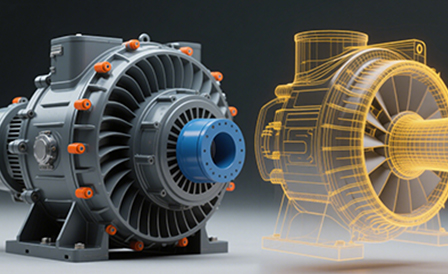
The HPC (High-Performance Computing) hardware solution addresses the technical requirements of different scenarios through heterogeneous computing architecture and customized hardware acceleration: scientific research relies on CPU parallel computing (such as AMD EPYC processors) and high-speed interconnect (InfiniBand) for large-scale simulations; engineering design combines CPU multi-core computing with specialized GPUs (NVIDIA RTX PR06000) to achieve real-time rendering of CAE/CAD; financial analysis focuses on low latency (FPGA acceleration) and high throughput (high-frequency trading servers), optimizing real-time data processing through RDMA networks and NVMe storage. Each scenario maximizes performance through a combination of task-specific hardware (CPU+GPU) and a tiered storage architecture (memory+NVMe SSD).

Scientific research
Engineering Design

Financial analysis

Advantages and value of the scheme

Improve resource utilization
Through dynamic resource scheduling and elastic scaling, the utilization rate of computing resources has been increased by over 30%, reducing hardware procurement costs.
Enhance system scalability
The distributed architecture and modular design facilitate horizontal and vertical expansion of the system, meeting the needs of rapid business growth.
Optimize data management
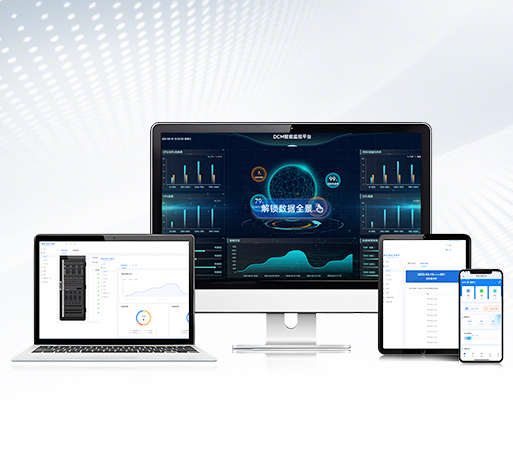
Distributed storage and efficient network interconnection ensure fast data storage and access, while tiered data storage reduces storage costs. Data backup and recovery mechanisms ensure data security.
Reduce energy consumption
The application of energy-saving technologies has reduced system energy consumption by 20% - 30%, thereby lowering operating costs and aligning with the concept of green development.
Enhance business competitiveness
Rapid computing power and efficient data processing capabilities assist enterprises in gaining a leading edge in scientific research, engineering, and business sectors, thereby accelerating innovation and business development.